Category Archives: Buildings

UK Net Zero Carbon Buildings Standard (UKNZCBS) Version 1 Published

The UK Net Zero Carbon Buildings Standard Version 1 has officially been published on 10th March 2026, providing the UK built environment with its first unified, evidence based definition of a Net Zero Carbon Aligned Building. The voluntary standard applies to new construction, existing buildings and retrofits, and is described by its developers as science […]

UK Government Publishes New Whole Life Carbon Management Guidance for Infrastructure & the Built Environment

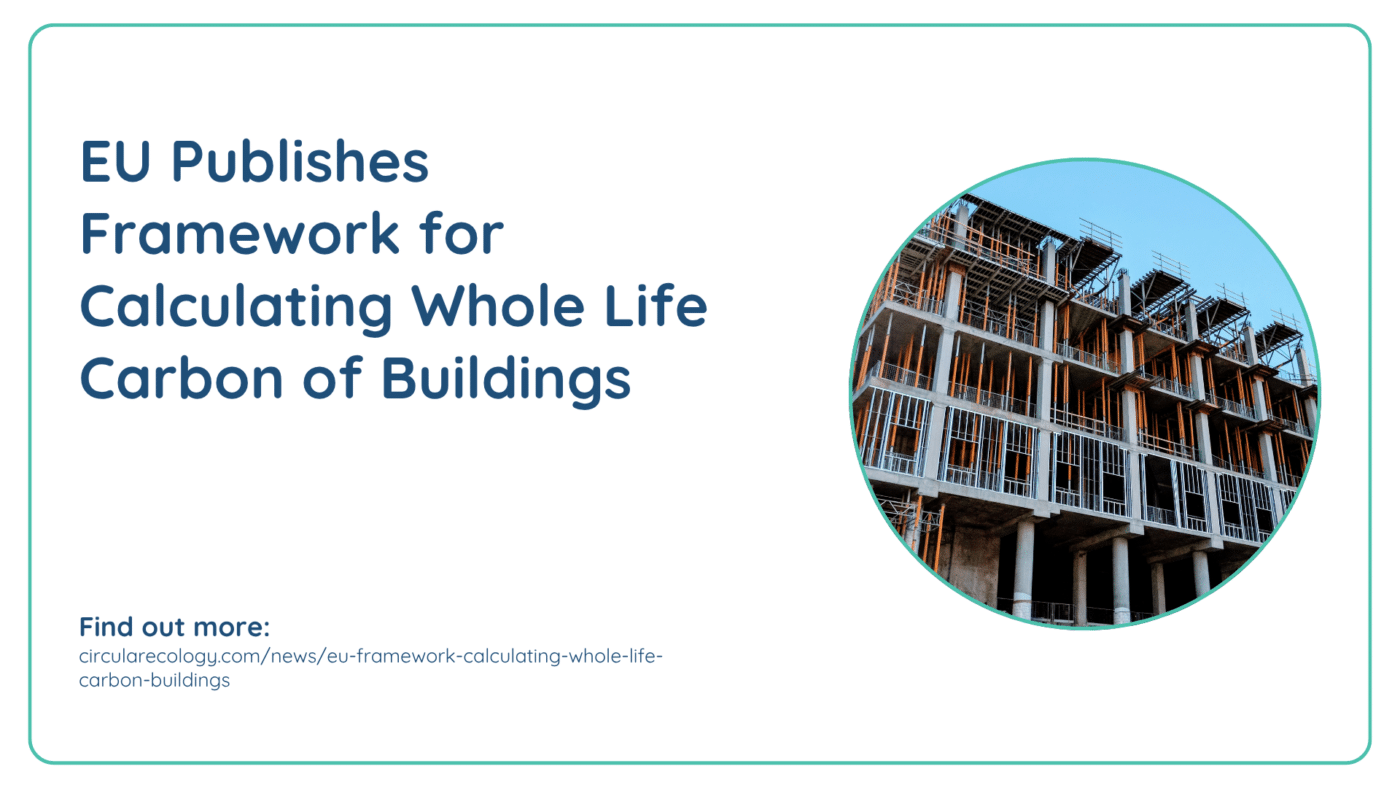
The UK Government has released new guidance on Whole Life Carbon (WLC) Management, published on 5 March 2026 by the National Infrastructure and Service Transformation Authority. The guidance sets out best practice for assessing and reducing carbon impacts across the full lifecycle of infrastructure and built environment projects, linking WLC principles directly to the Government’s […]

Deadline for Registering Projects Under BREEAM V6

Circular Ecology

Tuesday, 27th January 2026, is the final day to register new projects under the current BREEAM versions. After this date, it will no longer be possible to register projects against older schemes, and all new registrations will be required to follow BREEAM V7. If you haven’t already, we recommend you review pipeline projects and ensure […]

Webinar Recap: Whole Life Carbon Assessment (WLCA) of Construction Projects: What You Need to Know

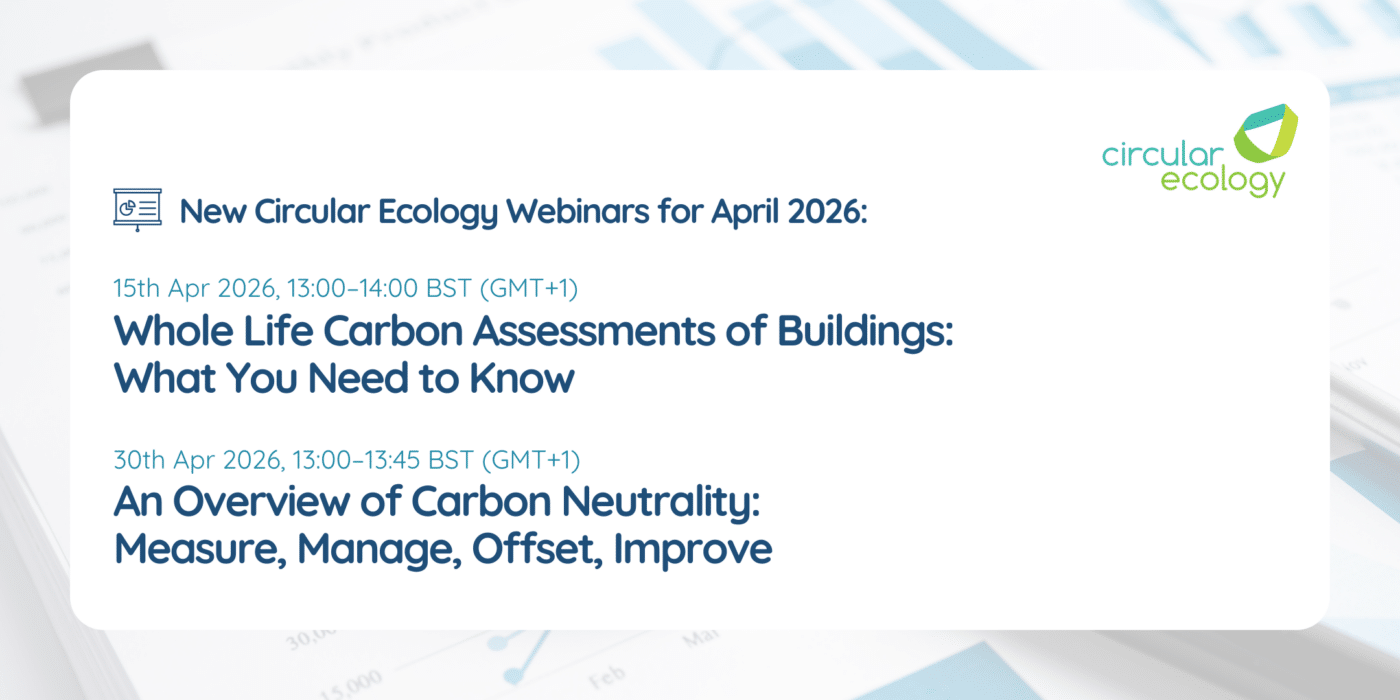
On February 27th, Circular Ecology hosted another free webinar. This time, the topic focused on the Whole Life Carbon Assessment (WLCA) of Construction Projects. Led by Dr Craig Jones, Managing Director, and Edwin Lowe, Delivery Manager, the session introduced WLCA and embodied carbon in buildings. Throughout the webinar, we addressed some key questions: What is embodied […]

Upcoming Webinar: Whole Life Carbon Assessment of Construction Projects: What You Need to Know

Join Circular Ecology for a webinar on Whole Life Carbon Assessments (WLCA) in Construction Circular Ecology invites you to a free upcoming webinar on the 27th of February, where we will provide a clear and practical overview of WLCA in Construction. What will this webinar cover? What is embodied carbon? What is a whole life […]

RICS Whole Life Carbon Assessment 2nd Edition Now in Effect

RICS Whole Life Carbon Assessment 2nd edition is now in effect. Released in November 2023, the updated standard has been expanded to cover all buildings and infrastructure across the asset life cycle.  In full effect from 1 July 2024, RICS members must follow the standard’s requirements when completing a whole life carbon assessment. This includes […]

Circular Ecology Support the Launch of the Built Environment Carbon Database (BECD)

The Built Environment Carbon Database (BECD) is envisioned to become the main source of carbon estimating and benchmarking for the UK construction sector and a practical instrument to support the decarbonisation of the built environment. The database has been developed to collect and supply product data and entity level data to the industry through its […]

RICS Whole Life Carbon 2nd Edition Released

On Tuesday RICS released the latest edition of their whole life carbon assessment (WLCA) standard. The first edition, released in 2017, was the methodology widely adopted by the construction industry to calculate whole life carbon.   The latest edition builds on the success of the first and has been extended to cover all buildings and infrastructure […]

IEA EBC Annex 80 Promotes Resilient Cooling in Buildings

Professor Behzad Sodagar, a Principal Sustainability Consultant at Circular Ecology, is a participant of the International Energy Agency Energy in Buildings and Communities (IEA EBC) Annex 80: Resilient Cooling of Buildings. The Annex seeks to “support a rapid transition to an environment where resilient low energy and low carbon cooling systems are the mainstream and […]

COP26 House – An Embodied Carbon Exemplar

Inside of the COP26 House

From its inception, a key aim of the COP26 House project from Beyond Zero Homes, was to minimise embodied carbon emissions. Most embodied carbon emissions come from the supply chain of construction products – the extraction of raw materials, processing, transporting and manufacturing. Further embodied carbon emissions come from transporting products to site, installation, repair […]