
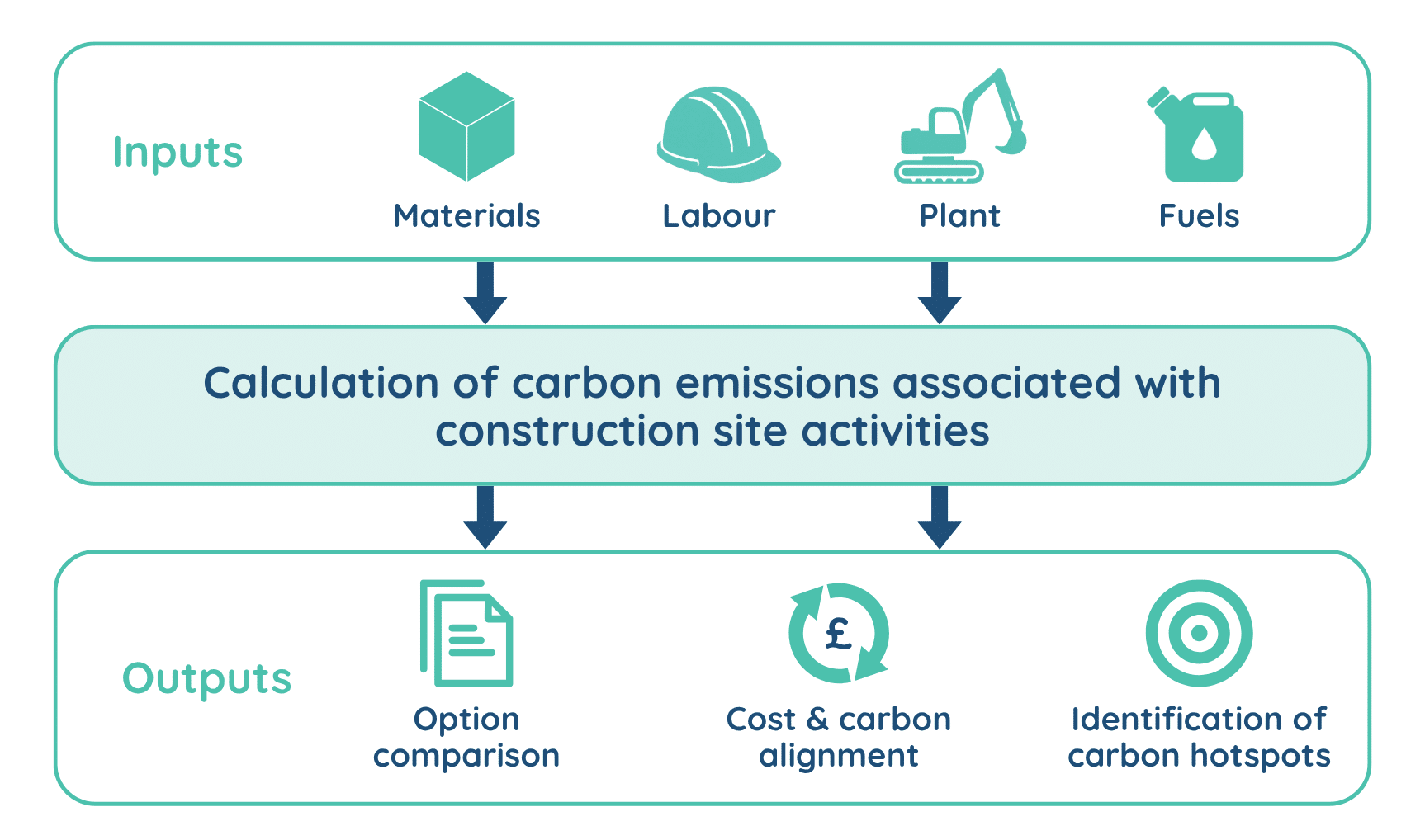
Understanding the carbon impacts of individual “construction activities” can provide more insight than relying on project totals. This approach examines the emissions from materials, labour, plant, and fuels used in each task on site. It allows project teams to see how specific activities contribute to overall impacts.
Carbon Libraries: Modelling Impacts of Site Activities
Activity Based Impact Modelling
Activity based modelling aligns with RICS Module A5.2 and is particularly useful when comparing design options or planning alternative construction methods. These activities are numerous; however, some examples include earthworks and excavation, using cranes to lift precast concrete into place, and fitting out building interiors. Estimating the carbon associated with an activity is particularly useful when considering different design options or approaches during the planning or construction phases of a project. Adopting an approach that estimates carbon from activities can support decision making, especially when it comes to the consideration of replacement vs. repair of an existing asset. Carbon modelling of a specific activity can cover a combination of different impacts associated with:
- Embodied carbon of materials used
- Transport of materials, plant, and labour to and from the site
- Working patterns and activities of labour
- Fuel purchased (or fuel consumed) within plant and equipment
When also trying to align cost and carbon reporting, the activity modelling approach corresponds well with resources or line items which might refer to “all in” material and activity costs, more commonly associated with ‘subcontractor’ items and work packages. Creating activity specific carbon factors gives project teams a clearer view of where carbon is generated and where reductions are possible. This level of detail can highlight opportunities that remain hidden in broader assessments and can support stronger decisions during design and construction.
Improve Project Planning with Activity Based Carbon Data
Please use the form below to contact us about developing activity specific carbon factors or integrating activity modelling into your wider project assessments.
Related (Carbon Libraries):
Looking to develop your understanding of carbon library development, or seeking related services? Explore our range of related content:
- Carbon Estimating & Carbon Library Development
- Bespoke Carbon Library Development for the Built Environment Sector
- Aligning Cost and Carbon
- Supplier Engagement: Data Collection Tools and Templates
- Carbon Libraries: Assessing Impacts of Project Labour
- Carbon Libraries: Modelling Impacts of Site Activities
- Carbon Libraries: Three Point Estimating in Carbon Assessment
- Carbon Libraries: Developing Bespoke Emissions Factors

Circular Ecology Launches IC+, a New Embodied Carbon Database for Professional Use
The launch gives more than 20 years of embodied carbon data development a sustainable foundation [...]
22
Oct
Oct
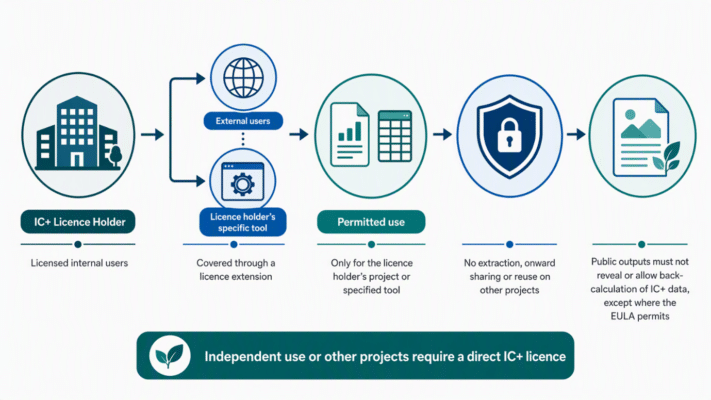
Understanding the IC+ End User Licence Agreement (EULA): Working with Premium Data
A practical guide to using, sharing and reporting licensed IC+ data As we venture into [...]
15
Oct
Oct
ISO 14060 Consultation Opens as SBTi Releases Corporate Net Zero Standard v2.0
Two major developments this month indicate continued evolution in the global net zero standards landscape, [...]
24
Jun
Jun
DESNZ Release 2026 UK GHG Conversion Factors
The Department for Energy Security and Net Zero has released the 2026 UK Government Greenhouse [...]
18
Jun
Jun