Blog, Buildings, Carbon Footprint, Construction, Embodied Carbon, Events, LCA, Life Cycle Assessment, News, Sustainability, Whole Life Carbon
EU Publishes Framework for Calculating Whole Life Carbon of Buildings
May
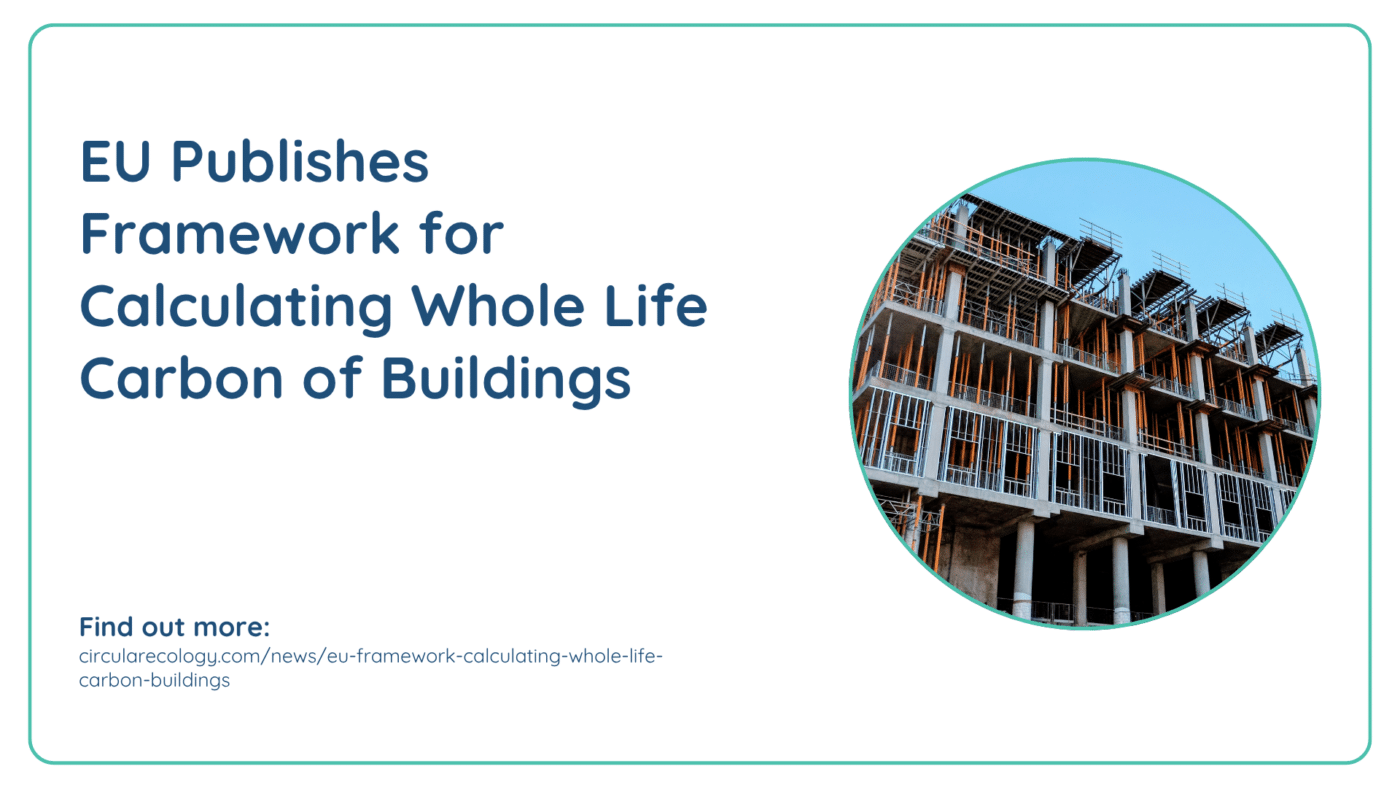
The European Commission has published a new framework for calculating the life cycle global warming potential (GWP) of new buildings, establishing a common approach to improve consistency across EU Member States. The Delegated Regulation (EU) 2026/52 aims to ensure that whole life carbon assessments are based on comparable methodologies, while still allowing flexibility to reflect national circumstances.
Under the revised Energy Performance of Buildings Directive (EPBD), life cycle GWP will need to be calculated and disclosed within energy performance certificates for new buildings over 1000 m² from January 2028, extending to all new buildings by 2030. The scope covers emissions across the full building lifecycle, including materials production, construction, operation, maintenance and end of life stages such as demolition and waste management.
The framework also seeks to align with other EU legislation, encouraging the use of manufacturer provided data where available, alongside default values where necessary. By supporting more consistent reporting, the regulation is expected to drive greater uptake of lower carbon materials, reuse and recycling, and improved design decisions across the built environment.
The regulation will enter into force on 24 May 2026.
Circular Ecology welcomes this as a positive step toward more consistent whole life carbon assessment.
Find out more: Calculation framework for new building life-cycle Global Warming Potential
