A Brief Guide to Environmental Product Declarations (EPDs)
An Environmental Product Declaration (EPD) is a document that can be used internationally to demonstrate the environmental performance or impact of a product or material over its lifetime.
An EPD turns a product’s environmental story into evidence that travels across projects and markets. It shows how a product is made, how it is used, and what happens at the end of its life. When this is presented clearly and verified independently, decisions speed up and conversations move forward. Read on to find out how to achieve that level of clarity.
Use the sections below to jump to focused guidance.
Where Are You on Your EPD Journey?
From here, you can browse all of our EPD resources so you can move from first principles to publication with greater confidence.

New to EPDs
Read our guide How to Produce and Publish an EPD for the full picture

Planning Delivery
Read How Long Does it Take to Produce an EPD? for typical stages and what may affect timelines

Building a Business Case
Read How Much Does it Cost to Produce an EPD? for commercial, technical, and client value

Clarifying Rules
Read EPDs: Product Category Rules Explained to understand the scope, boundaries, and comparability

Budget Planning
Read How Much Does it Cost to Produce an EPD? for an idea of the typical costs and how to manage them

Getting it Published
Read The Verification Process of an EPD to see what verifiers review and what you need to submit
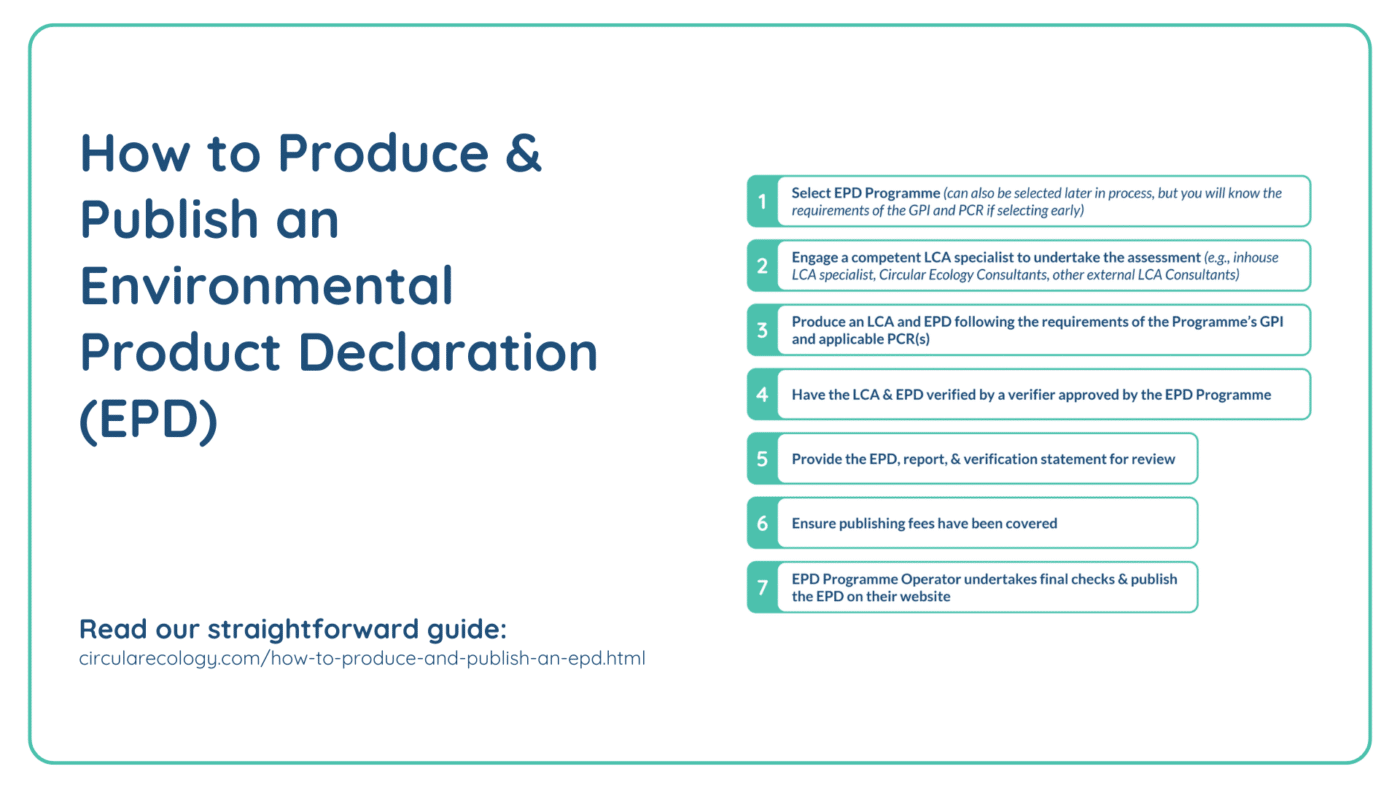
How to Produce and Publish an EPD
From the first decision to publication, we walk you through choosing an EPD programme, confirming the standards and the Product Category Rules, appointing a competent life cycle specialist, preparing the model and the draft, and then completing independent verification before programme checks and public listing. We’ve also covered which documents programmes expect at submission and how to avoid delays.
Read more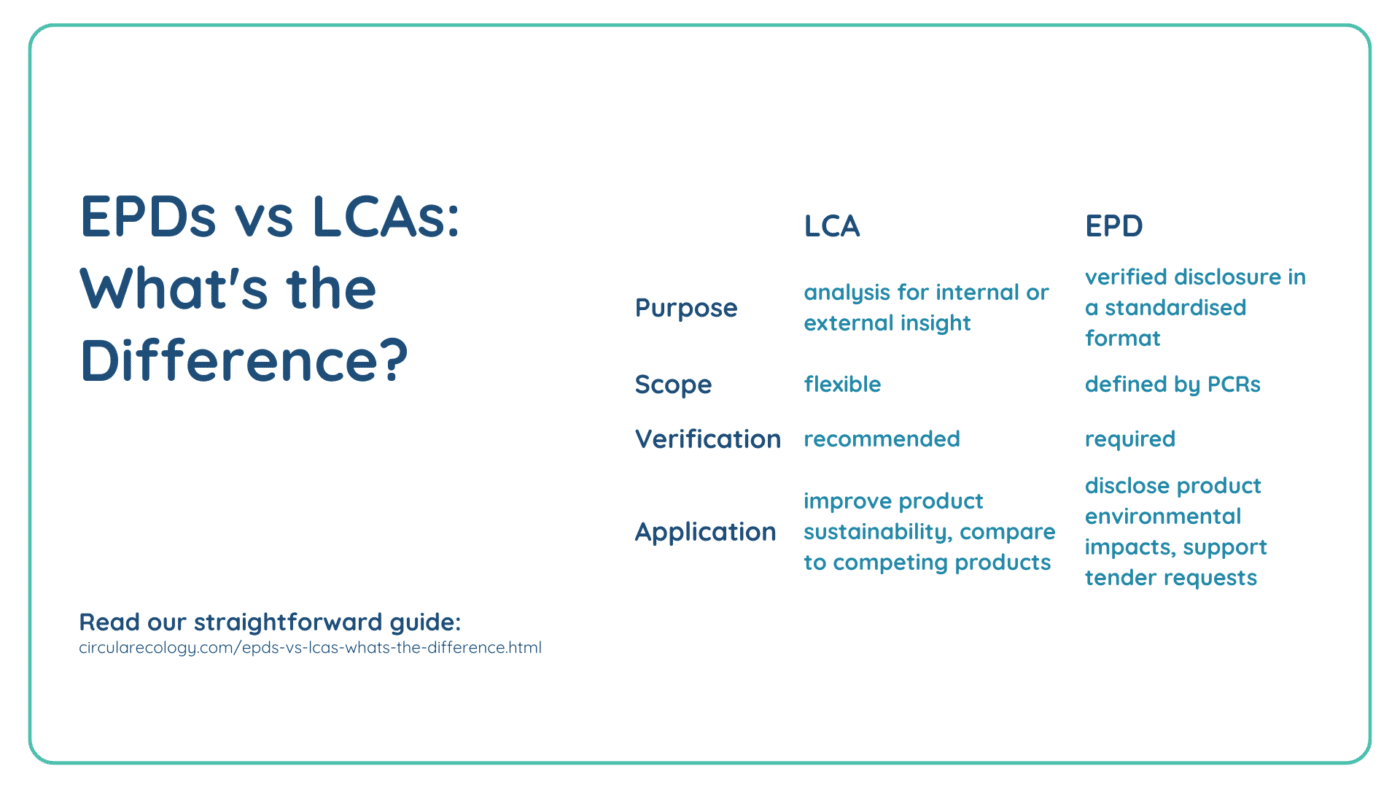
EPDs vs LCAs: Where They Differ & How They Work Together
If you are new to this space, start here. We explain how an Environmental Product Declaration speaks to external stakeholders while the life cycle assessment does the heavy lifting behind the scenes. Discover when an internal assessment is the right tool and when you need a verified declaration for projects and procurement. Read on for a comparison of purpose, audience, scope, and verification.
Read more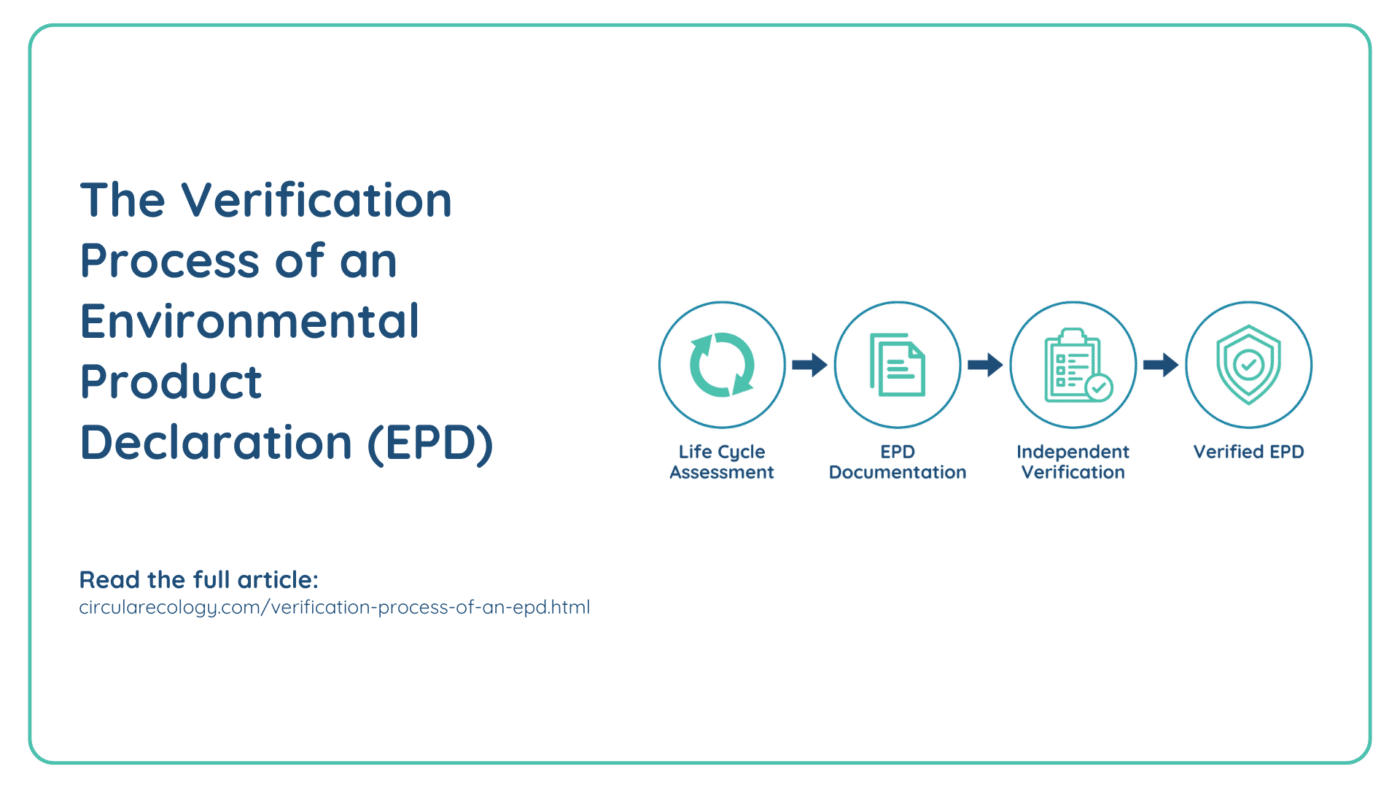
The Verification Process of an EPD
Verification gives users confidence that methods, data, and reporting align with the correct standards and product category rules. We have broken down who can verify, how independence is maintained, and what reviewers look for in methodology, data quality, transparency, and internal consistency. Find out what to submit, what can influence timing, and what happens between signoff and public registration.
Read more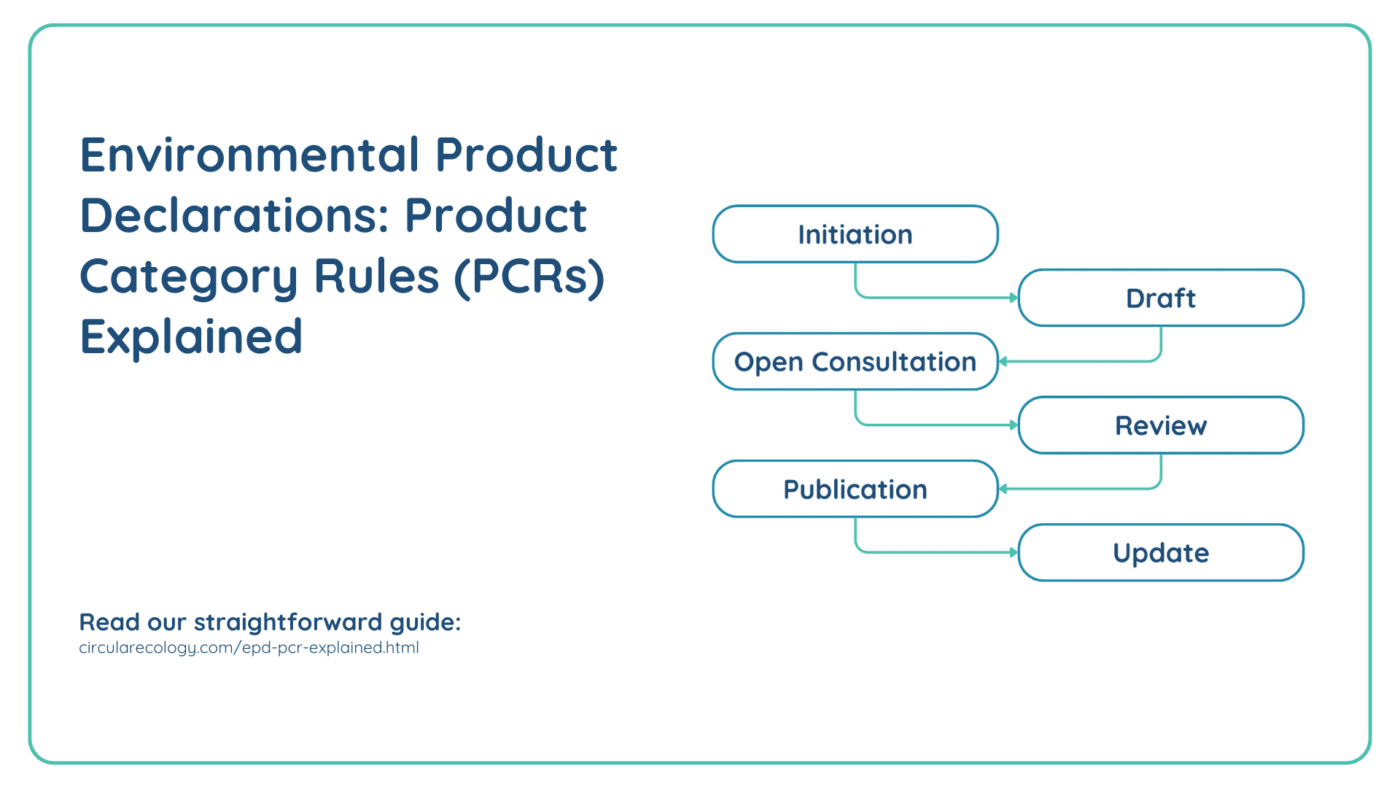
Product Category Rules Explained
Product Category Rules are the rules that keep EPDs comparable within a product group. Find out what a PCR covers, how complementary PCRs (c-PCRs) add detail for subcategories, and how construction rules based on EN 15804 and ISO 21930 shape reporting. If you are choosing between candidate PCRs, we’ve compiled a short decision checklist and a summary of what happens when a PCR updates during your EPD cycle.
Read more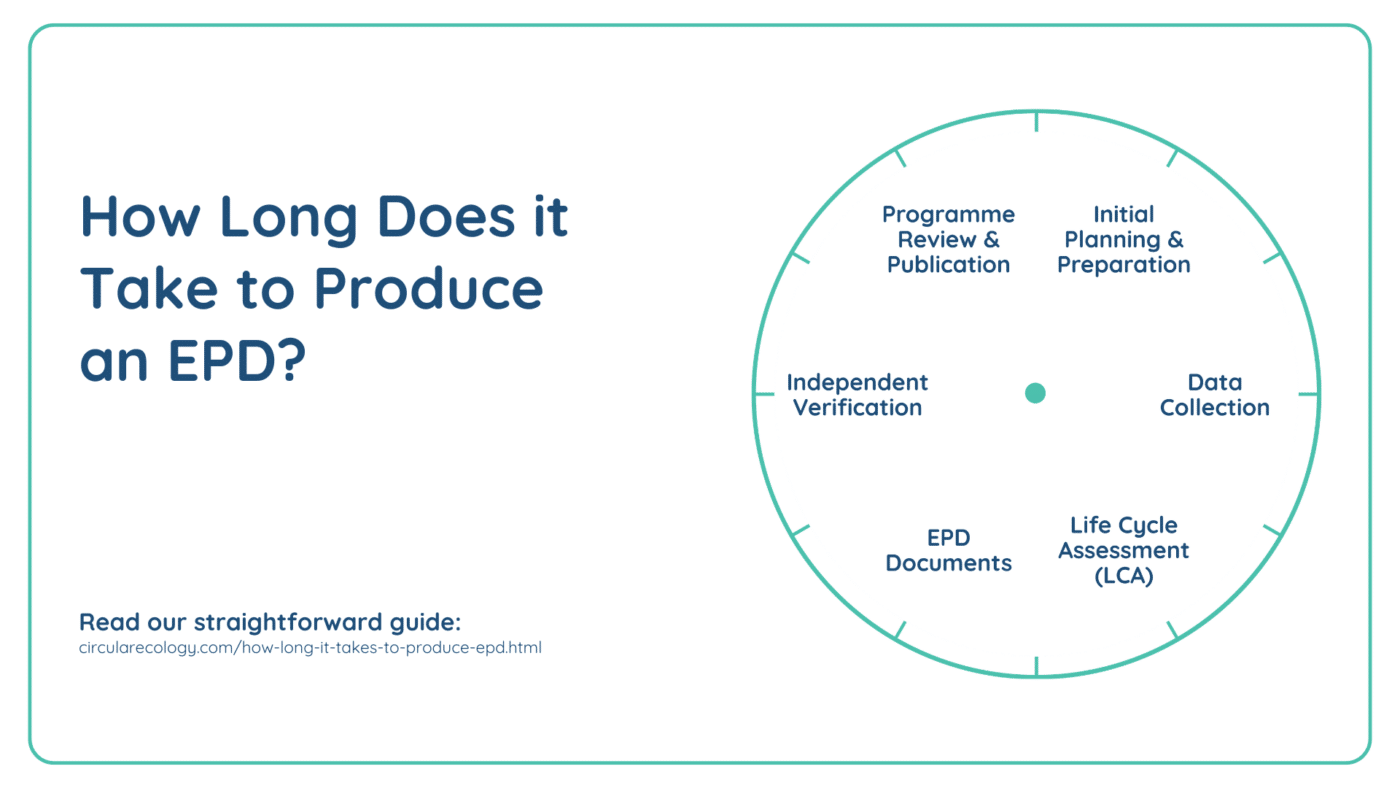
How Long Does it Take to Produce an EPD?
Timeframes depend on data readiness, product complexity, supplier engagement, and verifier capacity. The journey includes planning, data collection, modelling, documentation, verification, and programme publication, and we’ve broken down where projects gain or lose time.
Read more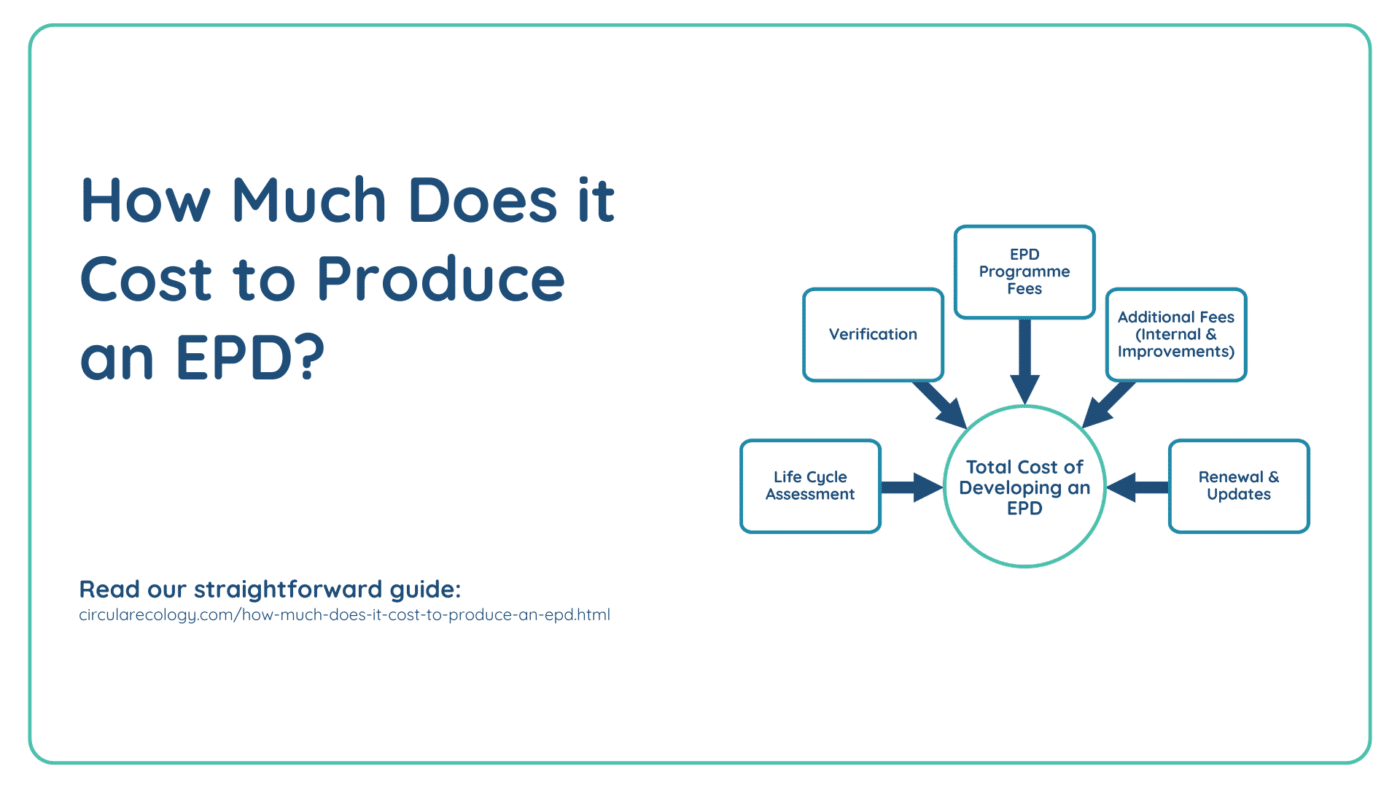
How Much Does it Cost to Produce an EPD?
Costs are broken down into three areas. Life cycle assessment and EPD preparation, independent verification, and programme fees. In this article, we summarise published workload and cost findings, explain why figures vary by sector and product, and show how a portfolio approach can lower the average cost per declaration.
Read more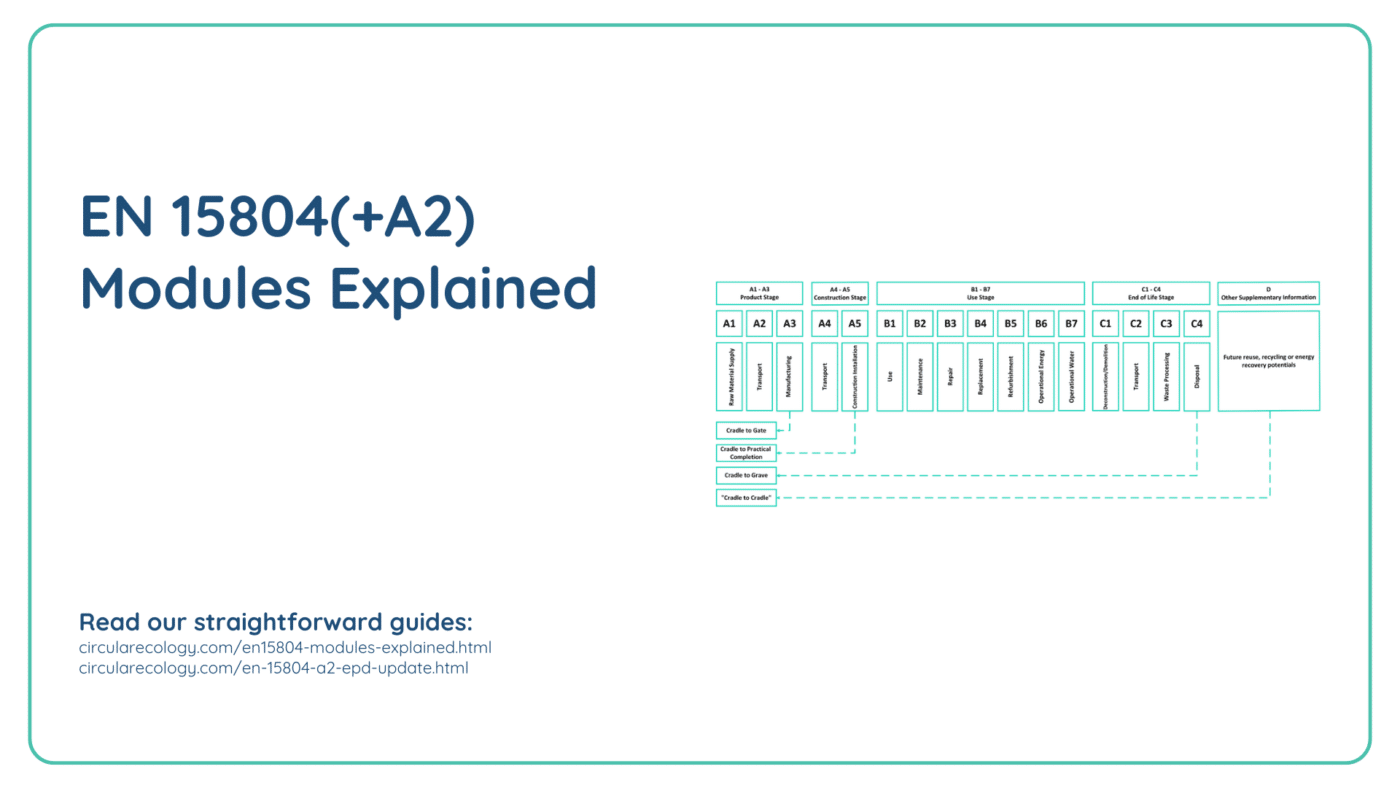
EN 15804(+A2) Explained
EN 15804 is considered the most popular global standard for producing environmental product declarations (EPD) for construction products. We’ve mapped the full structure of EN 15804 from A1 to A3 for the product stage, A4 to A5 for construction, B1 to B7 for use, C1 to C4 for end of life, and Module D for benefits and loads beyond the life cycle, with information on how this aligns to the construction life cycle assessment scope.
We have also highlighted the key changes shaping most construction declarations with the EN 15804+A2 update, including the expanded set of impact indicators, explicit biogenic carbon reporting, and mandatory reporting of stages C1 to C4 and Module D, plus how cradle to gate, cradle to gate with options, and cradle to grave are framed.
Read more: EN 15804 Modules Explained Read more: EN 15804+A2 Update & What it Means for EPDs
The Circular Ecology EPD Programme
The Circular Ecology EPD Programme, established to provide verified EPDs across the construction sector and beyond at a competitive price, provides a structured framework for developing, verifying, and publishing Environmental Product Declarations (EPDs) in accordance with ISO 14025 and EN 15804.
Read moreGet Support
If you are preparing an EPD or planning to begin the process, we can help with:
- Life Cycle Assessment and data support
- EPD drafting and document preparation
- Independent verification and publication through our programme
Contact us by completing the form below to discuss your product and timelines.
Related (EPDs):
Interested in learning more about Environmental Product Declarations? Explore our range of related content: