How to Produce and Publish an Environmental Product Declaration (EPD)
Environmental Product Declarations (EPDs) provide clear, consistent information about the environmental impacts of products. They follow recognised standards and allow organisations to share verified life cycle results with customers, designers, and procurement teams. Producing an EPD is a structured process, and the steps below outline how this is done in a simple and practical way.
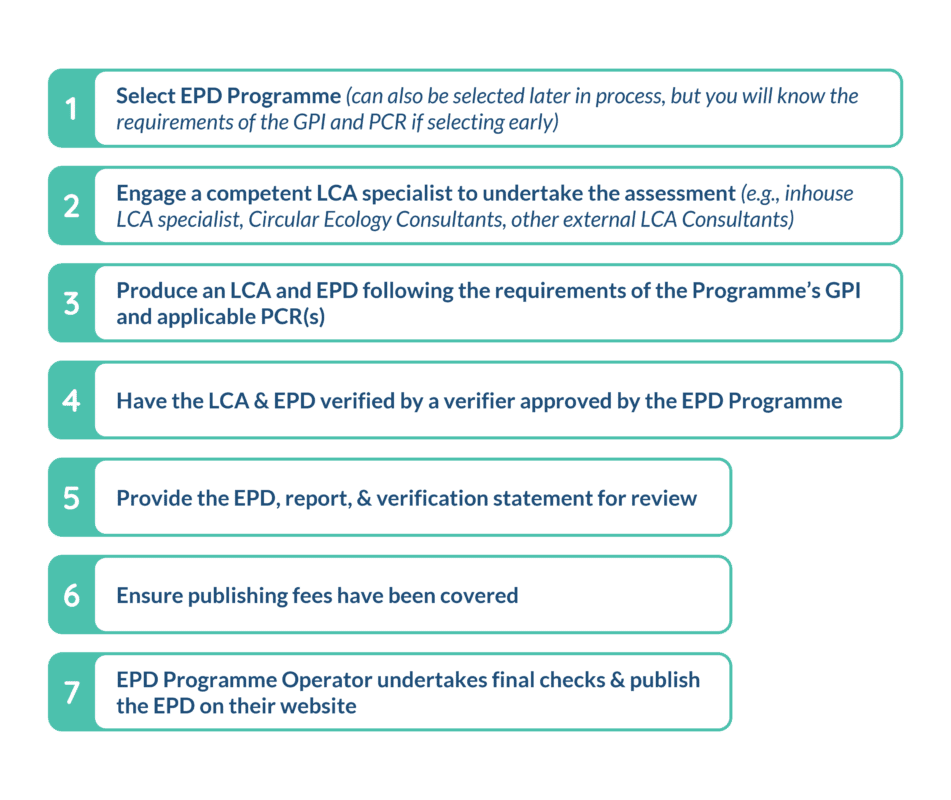
1. Select an Environmental Product Declaration (EPD) Programme
The first step is to decide which EPD Programme you want to publish with. Each programme has its own rules, guidance and templates, so choosing one at the start helps you understand what will be needed later. If the programme is chosen at a later stage, the process can still continue, but selecting it early allows you to follow the correct requirements from the beginning.
When selecting a programme, the main considerations are whether the programme aligns with your intended markets, whether it follows the standards you need (i.e., EN 15804, ISO 21930, etc.), and the fee structure of the programme.
Each EPD Programme sets its own fees, which can differ from programme to programme. Some programmes charge membership fees, some apply annual fees across the full 5 year validity period, and others may include listing or administrative fees. It is therefore helpful to understand the full cost over the entire 5 year period before deciding on a programme.
For those choosing to publish through the Circular Ecology EPD Programme, there are no annual fees during the 5 year validity period. Visit our Programme Fees page for the full breakdown.
Choosing the programme at the start makes the rest of the process clearer, but it is still possible to confirm it later if needed.
If you choose to publish through the Circular Ecology programme, the Key Documents outline the structure, expectations, and submission requirements.
2. Engage a Competent Life Cycle Assessment (LCA) Specialist
An EPD is based on a Life Cycle Assessment (LCA), so you will need support from someone with suitable experience. This could be an in house LCA specialist or an external consultant. The main objective at this stage is to make sure the technical work is carried out in a consistent and reliable way.
The LCA specialist will:
- Confirm which standards apply
- Identify the relevant Product Category Rule (PCR)
- Explain the type of data needed
- Guide you through the LCA and reporting process
Choosing the right specialist helps ensure the assessment reflects your product accurately and meets the requirements of the programme.
Circular Ecology are able to help organisations undertake Life Cycle Assessments.
3. Produce the LCA and EPD According to the Programme Requirements
Once the specialist is in place, the life cycle assessment can begin. This stage involves collecting the necessary data, modelling the impacts and preparing the EPD document in line with the programme’s general guidance and the chosen Product Category Rules (PCR).
This work includes:
- Confirming which life cycle stages need to be included
- Collecting consistent product and manufacturing data
- Selecting suitable background datasets
- Adhering to standards and PCRs
- Carrying out the life cycle modelling
- Presenting the results in the required format
The final EPD must follow the structure set out by the programme and include all required information, such as the declared unit, system boundaries, environmental indicators and supporting explanations.
4. Have the LCA and EPD Verified by an Approved Verifier
All EPDs must be reviewed by an independent verifier who is approved by the EPD Programme. Verification ensures the assessment is consistent with the programme’s rules and that the information is clear and correct.
A verifier will check:
| Verification Area | What Is Reviewed |
| Methodology | Alignment with ISO standards and the PCR |
| Data | Quality, completeness and relevance |
| Transparency | Clear explanation of assumptions and methods |
| Consistency | Units, boundaries, and results aligning across the document |
You will usually be asked to provide the full EPD draft, the LCA model, and any supporting documentation. Addressing verifier questions at this stage helps prepare the EPD for publication.
5. Provide the Final Documents for Review
Once verification is complete, the next step is to send the required documents to the EPD Programme for review. These usually include:
- The final EPD
- The verification statement
- The LCA report
- Any additional documentation requested by the programme
This stage confirms that the EPD meets all submission requirements before it can be published.
6. Cover the Publishing Fees
EPD programmes require publishing fees to cover the work involved in registering and hosting the declaration. These fees should be settled before the EPD can be added to the programme’s public database.
The fee structure is available through our programme and can be viewed on our Programme Fees page.
7. Final Checks and Publication
Once the documents and fees have been received, the EPD Programme carries out final checks. This confirms that:
- All materials have been provided
- The verification statement is valid
- The formatting meets the programme requirements
After these final checks, the EPD is published on the programme’s website and becomes publicly accessible. The EPD will also receive a unique registration number for use in project documentation and procurement submissions.
Most EPDs remain valid for five years. If there are significant changes to the product or manufacturing process before then, an update may be required.
Ready to Begin Your EPD?
If your organisation is preparing to develop an EPD or would like support with life cycle assessment or verification, our team can help.
Our EPD Programme has been developed to make the publication process straightforward, transparent and supportive for organisations of all sizes. The aim of the programme is to provide a clear route for creating trusted declarations based on recognised standards. It also ensures that organisations can access the guidance they need at each stage, from life cycle assessment through to verification and publication.
The programme has been built around our commitment to quality, professional ethics, and continuous improvement, and it reflects our focus on making environmental information accessible to a wider community.
We can support you with:
- Undertaking a Life Cycle Assessment
- Verification of Environmental Product Declarations
- Publishing and registering Environmental Product Declarations
If you would like to discuss how our EPD Programme can support your work, please contact us using the form below.
Related (EPDs):
Interested in learning more about Environmental Product Declarations? Explore our range of related content:
Circular Ecology Launches IC+, a New Embodied Carbon Database for Professional Use
The launch gives more than 20 years of embodied carbon data development a sustainable foundation [...]
Oct
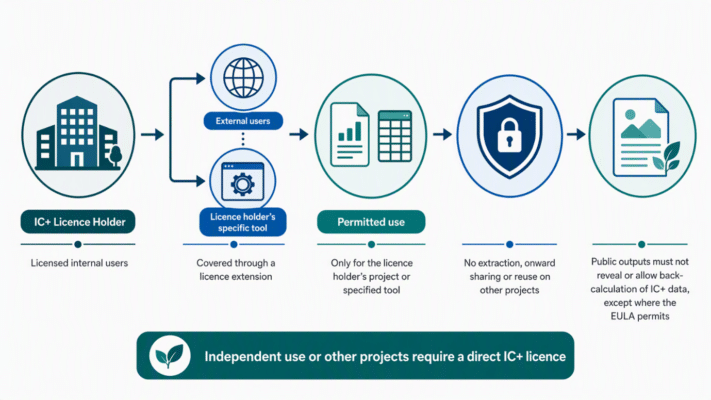
Understanding the IC+ End User Licence Agreement (EULA): Working with Premium Data
A practical guide to using, sharing and reporting licensed IC+ data As we venture into [...]
Oct
ISO 14060 Consultation Opens as SBTi Releases Corporate Net Zero Standard v2.0
Two major developments this month indicate continued evolution in the global net zero standards landscape, [...]
Jun

DESNZ Release 2026 UK GHG Conversion Factors
The Department for Energy Security and Net Zero has released the 2026 UK Government Greenhouse [...]
Jun