How Long Does it Take to Produce an EPD?
The time it takes to produce an Environmental Product Declaration varies from one project to another. It depends on the quality of available data, how complex the product is, how many suppliers are involved and the requirements of the chosen EPD Programme. While there is no universal timeline, most organisations can expect the full process to take months, rather than weeks.
This guide breaks the process into clear stages so you can understand what affects the overall timeline and what you can do to keep things running smoothly.
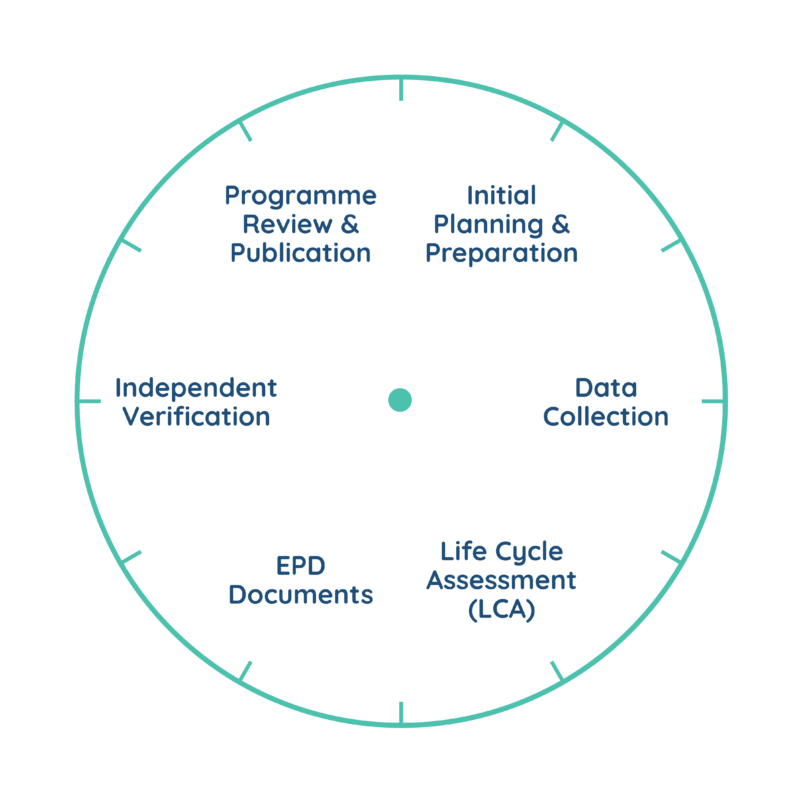
Initial Planning & Preparation
The work begins with defining the scope of the EPD, selecting the EPD programme, confirming the relevant Product Category Rule, and bringing together the internal teams who will support data collection. Product Category Rules are reviewed periodically, so it is worth checking the PCR currency at the start.
This initial setup can take just a few days, depending on how quickly roles are confirmed and background information is gathered. However, decision making at this stage may delay the process by a few months, particularly if it is the organisation’s first EPD and they are still learning the landscape. A clear scope helps avoid delays later in the process, particularly where there are several possible product boundaries or multiple manufacturing sites.
Data Collection
Data collection is typically the longest stage. Organisations must gather consistent information covering materials, manufacturing inputs, energy use, transport, waste, and other relevant activities. This work relies on several teams and often on external suppliers.
This stage can take several weeks to several months, with the exact duration depending on how organised internal systems are and how quickly suppliers provide upstream information. Some suppliers may already have environmental data available; others may need time to prepare it.
Where data gaps exist, they must be resolved before assessment work can begin. It’s also important to note that using a single defined reference year for all datasets helps keep modelling and verification consistent across facilities and suppliers.
Life Cycle Assessment (LCA)
Once the data is assembled, the life cycle assessment can be carried out. The assessment models the environmental impacts of the product across the required life cycle stages, following ISO 14040 and ISO 14044. The time required depends on the complexity of the product and the amount of checking needed.
For most projects, this stage can take from several weeks to several months, depending on how much data processing is required and how complex the model is to build. Realistically, this stage overlaps with the data collection timeline. More intricate supply chains or multi‑variant products will naturally require more time.
EPD Documentation
After the assessment, the results are compiled into the EPD document. The EPD typically includes sections written by the EPD owner, such as the product description, technical information, and performance details, while the LCA consultant completes the modelling results and methodological content.
Report development timelines vary. Drafting and refining the EPD can take several weeks, especially for first time publications or when the Product Category Rule requires detailed scenario descriptions or supporting explanations.
Independent Verification
Verification is required under ISO 14025 and involves a qualified independent verifier reviewing the life cycle assessment and the EPD document. Timelines depend heavily on the quality of the submission, the number of clarifications required and the availability of verifiers.
Straightforward verification can take about a few weeks, but should ideally allow for 1 to 2 months for most projects. During periods of high demand or where the initial LCA requires significant rework or new primary data, verification timelines may extend to several months.
The review and correction cycle may last several weeks to a couple of months, depending on the verifier’s workload and the completeness of the submission.
This means verification can be a notable part of the overall timeline, especially at busy times of year or where multiple queries must be addressed. Submitting a clear, well structured LCA and a draft EPD that follows the PCR and programme rules closely can help keep verification efficient and reduce the likelihood of delays.
Programme Review & Publication
Most EPDs are valid for 5 years, and the validity period is tied to publication rather than the data collection date.
Following verification, the EPD is submitted to the programme operator for final checks and publication. Operators have their own internal processes, and timelines vary. Publication can be completed within 2 to 3 weeks once a final package (free from errors) has been received.
Other programmes may require additional internal checks before assigning an EPD number and publishing the declaration.
How Long Does the Full EPD Process Take?
The full EPD process usually takes several months, particularly for first time declarations. Verification alone may extend the overall timeline during busy periods, while publication can often be completed within a few weeks once verification is complete.
Taken together, most organisations can expect the full process to take 3 to 6 months, with shorter timelines possible for well prepared projects and longer timelines likely for complex products or where verifier demand is high.
Reduce the Time it Takes to Produce an EPD
If you are preparing your first declaration or looking to streamline a portfolio of products, our team can support you through each stage, from early scoping to final publication.
The Circular Ecology EPD Programme provides a clear route to publishing Environmental Product Declarations, with a focus on independence, quality and practical guidance. Contact us to find out more.
There are ways to effectively reduce the overall time it takes to produce an EPD. Please complete the form below, and we will send you a summary you can use as a checklist for minimising the timeline.
Related (EPDs):
Interested in learning more about Environmental Product Declarations? Explore our range of related content:
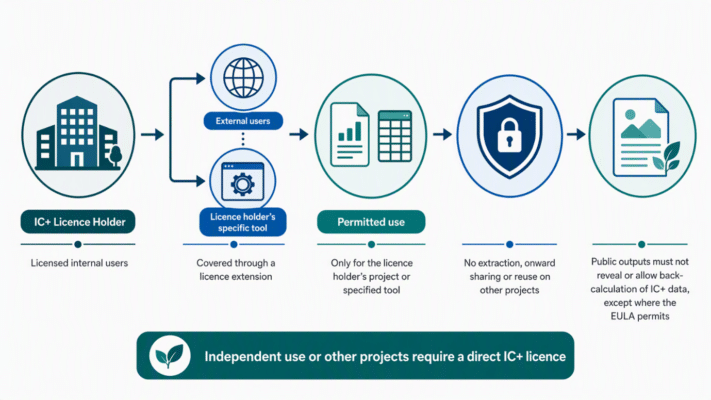
Understanding the IC+ End User Licence Agreement (EULA): Working with Premium Data
A practical guide to using, sharing and reporting licensed IC+ data As we venture into [...]
Oct
ISO 14060 Consultation Opens as SBTi Releases Corporate Net Zero Standard v2.0
Two major developments this month indicate continued evolution in the global net zero standards landscape, [...]
Jun

DESNZ Release 2026 UK GHG Conversion Factors
The Department for Energy Security and Net Zero has released the 2026 UK Government Greenhouse [...]
Jun

EU Publishes Framework for Calculating Whole Life Carbon of Buildings
The European Commission has published a new framework for calculating the life cycle global warming [...]
May