The Verification Process of an Environmental Product Declaration (EPD)
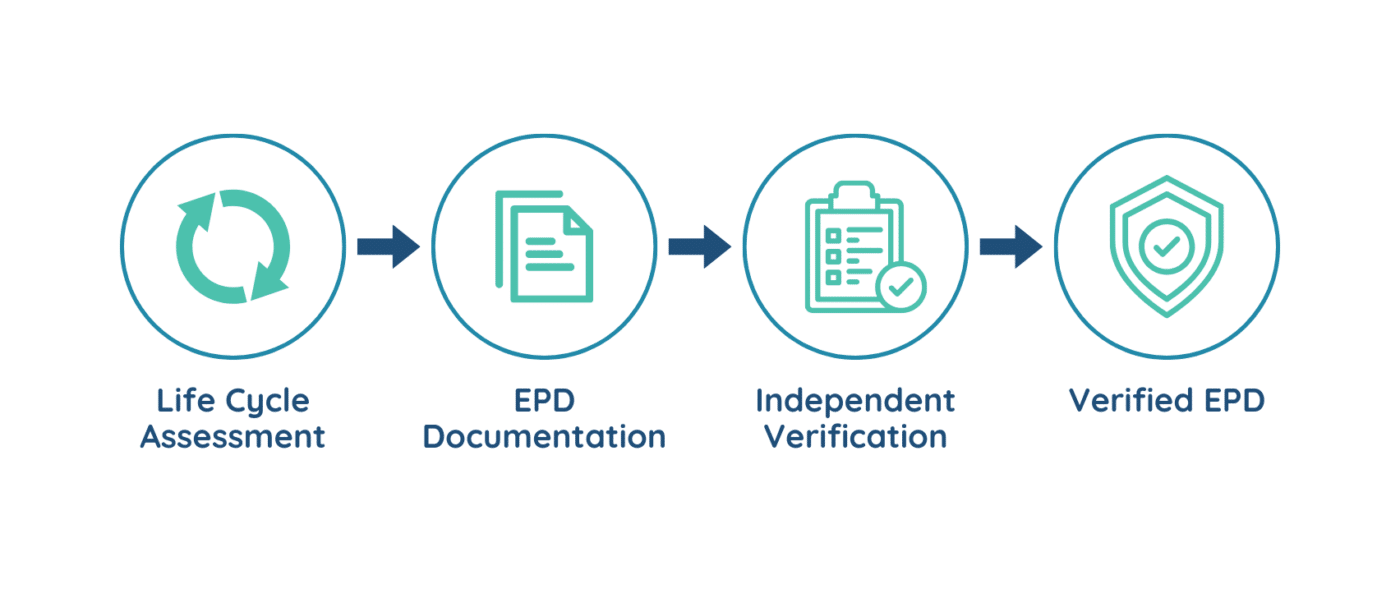
Verification is a key part of producing an Environmental Product Declaration (EPD). It confirms that the Life Cycle Assessment (LCA) and the EPD document meet recognised standards and follow the requirements of the chosen Product Category Rule (PCR). A strong verification process brings confidence to those who use EPDs, including designers, clients, and procurement teams. It also ensures that the results are consistent and supported by a clear audit trail.
What Does EPD Verification Involve?
The verifier must check that the methods, data and reporting follow the relevant standards and the Product Category Rules. They must also confirm that the work has been carried out in a transparent and traceable way. A thorough verification process provides more reassurance that the information presented is clear, consistent and based on recognised methods, and is a requirement of ISO 14025.
Who Can Verify an EPD?
Only individuals who meet independence and competence requirements may act as verifiers. ISO 14025 states that verifiers must not have been involved in carrying out the life cycle assessment or preparing the EPD. They must also be free from conflicts of interest.
Under the Circular Ecology EPD Programme, for example, there are three main types of verifiers. These are useful for understanding the options that may be available:
- Internal verifier
A verifier who works for the EPD owner. The option is recognised in ISO 14025
- External verifier
A verifier who is not employed by the EPD owner
- Third party verifier
A verifier who is independent of both the EPD owner and the LCA practitioner. Our definition of third party verification is stricter than the ISO 14025 definition
Whichever type of verifier is used, they must be approved by the EPD programme and be independent from the assessment work. They must not have taken part in:
- Collecting data
- Modelling the life cycle assessment
- Preparing or reviewing the EPD document
These requirements ensure impartiality. They help improve trust in the EPD as a reliable environmental declaration.
What Does the Verifier Check?
A verifier reviews several key areas. These checks help confirm that the assessment and the EPD meet recognised standards and follow the correct methods, bringing structure and clarity to the review. They also help to highlight any gaps that need to be addressed before publication.
| Area | What is checked |
| Methodology & Standards | Alignment with ISO 14040, ISO 14044, ISO 14025, and the chosen PCR (such as EN 15804, ISO 21930, c-PCRs) |
| Data | Quality, completeness, relevance and use of suitable background datasets |
| Transparency | Assumptions, methods and boundaries explained clearly |
| Consistency | Results, units and system boundaries aligned throughout the EPD |
What Needs To Be Submitted?
To complete the verification process, the verifier will usually ask for the following:
- The draft EPD
- Access to the life cycle assessment model
- Supporting data and documentation
- A clear record of methods and assumptions
Providing complete and organised information makes the review smoother and helps avoid delays. Preparation can make a notable difference to the time and effort involved in verification. Before submitting documents, it is helpful to:
- Check that all data is consistent with the defined scope
- Confirm that boundaries, units and assumptions match the PCR
- Ensure that tables and figures are clear
- Review the results for anything unusual
- Check that the EPD follows the structure set out by the EPD programme
A short internal review with colleagues can support this process. It often helps with identifying small issues before submission.
How Long Does Verification Usually Take?
The time required for verification varies between EPD programmes and depends on the quality of the documents submitted. Verification may be achieved anywhere within a few weeks to a few months, with shorter timeframes possible when the EPD and LCA are complete, clear, and well organised.
Longer timeframes may be expected if further clarification is needed, the verifier has questions about the data, or the EPD includes several product variations. Planning ahead and submitting complete information helps keep the timeline predictable.
What Does it Cost to Verify an EPD?
Verification costs vary between EPD programmes and between individual verifiers. Costs can depend on the complexity of the life cycle assessment, the number of product variants, and the level of information that needs to be reviewed. Programmes may also have different fee structures, so it can be helpful to understand these early.
The cost to verify a single EPD may vary from (or more for more complex assessments) and includes a verification fee based on the time needed for the review, and any additional fees for multiple product variants.
Verification is a single cost during the five year validity period unless the product changes and an updated EPD is needed. When verifying multiple EPDs at once, verification costs per EPD may be reduced considerably.
What Happens After Verification?
Once the verification is complete, the next steps involve final checks and publication by the chosen EPD programme. These checks ensure that the EPD follows the programme requirements, the verification statement is valid, and all supporting materials have been supplied accordingly.
Following this, the EPD is published with a unique registration number. It then becomes publicly available through the programme’s website. Most EPDs remain valid for five years unless the product or its manufacturing process changes significantly. If changes occur during this period, an updated EPD may be needed.
Ready To Begin?
Verification is an important part of producing a reliable Environmental Product Declaration. If you are preparing an EPD or planning to begin the process, we can support you with life cycle assessment, verification, and publication through our programme.
Our EPD Programme aims to provide a clear and supportive route for publishing Environmental Product Declarations. We intend to use a mix of external and third party verification, in line with recognised standards and our focus on quality and independence. Only approved verifiers may be used. Qualified verifiers are welcome to contact us using the form below.
If you would like to see what is required when publishing through our programme, our EPD Programme Key Documents and FAQs provide more information.
Contact us using the form below to discuss your next steps.
Related (EPDs):
Interested in learning more about Environmental Product Declarations? Explore our range of related content:
ISO 14060 Consultation Opens as SBTi Releases Corporate Net Zero Standard v2.0
Two major developments this month indicate continued evolution in the global net zero standards landscape, [...]
Jun
DESNZ Release 2026 UK GHG Conversion Factors
The Department for Energy Security and Net Zero has released the 2026 UK Government Greenhouse [...]
Jun
EU Publishes Framework for Calculating Whole Life Carbon of Buildings
The European Commission has published a new framework for calculating the life cycle global warming [...]
May
June 2026 Webinar: Making Credible Carbon & Environmental Reduction Claims Using LCA
Our next free webinar takes place on 11th June 2026, and will explore how Product [...]
May