Environmental Product Declarations: Product Category Rules (PCRs) Explained
What is a Product Category Rule (PCR)?
Product Category Rules (PCRs) sit at the heart of an Environmental Product Declaration (EPD). A PCR is the rule set that tells you how to build the Life Cycle Assessment (LCA) and how to present results for a defined product category. The aim is simple: when everyone follows the same rules, EPDs are consistent and comparable within that category, as required by ISO 14025.
What Does a PCR Cover?
A typical PCR will specify the unit to report against, the life cycle stages to include, data quality and allocation rules, which indicators to report, how scenarios are built, and what must appear in the EPD itself. This ensures results are generated the same way for products in the same category.
Two unit types appear in practice. Use a functional unit when performance over time is defined (e.g., over a Reference Service Life). In all other cases, use a declared unit. PCRs and EN 15804 explain when each applies, so results remain meaningful and comparable.
How are PCRs Developed?
PCRs are developed through an open, transparent process with stakeholder participation. Although details vary by EPD Programme, the common steps are:
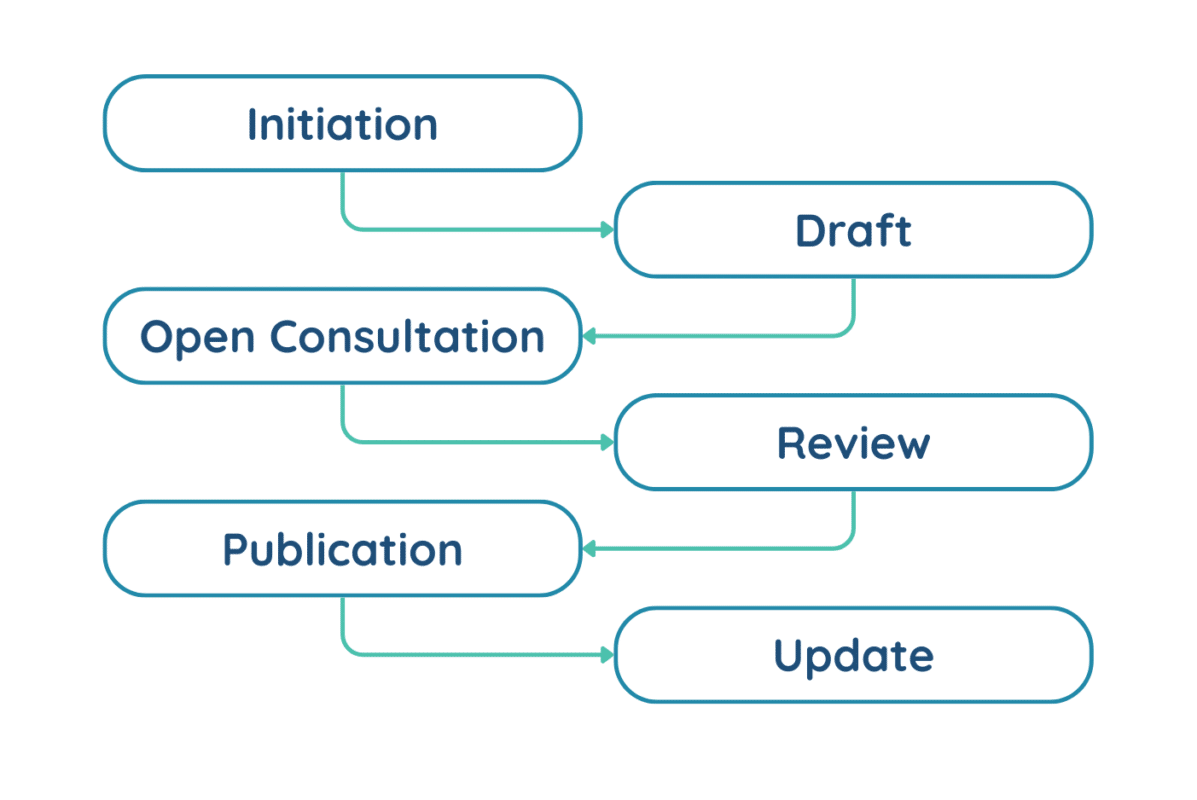
1. Initiation
A product category is defined, and a committee is formed with LCA and market experts. The work is announced publicly, inviting wider participation.
2. Draft Preparation
A draft PCR is written using the programme’s template and the parent standards (see ‘Relevant International Standards’ below). The scope, units, system boundaries, datasets, allocation, scenarios, indicators, and EPD content are set out in detail.
3. Open Consultation
The draft is made available for open consultation so manufacturers, users, NGOs, and experts can review and suggest changes. Comments are recorded and addressed to build consensus and quality.
4. Independent Review and Approval
A technical review panel checks conformity with the standards and with the programme’s rules before publication.
5. Publication
The approved PCR is listed by the programme operator, with version, scope, and validity for use in EPD projects.
6. Update
Reviewed on a cycle with consultation and approval, with transition dates published; EPDs keep original validity and move to the new PCR at renewal.
PCR development follows international guidance on good process and methods (e.g., ISO/TS 14027 and sector guidance) to ensure the rules are fair, consistent, and transparent.
What are Complementary PCRs (c-PCRs) and Subcategories?
For broad product groups, a main PCR can be complemented by c‑PCRs that add rules for narrower subcategories, such as specific materials or assemblies. This layered approach improves consistency without rewriting the core rules for every product type.
Current European work under the Construction Products Regulation is expanding the use of c‑PCRs across product technical committees, reflecting a move toward more harmonised sector rules.
Relevant International Standards
| Standard | Role |
| ISO 14025 | Sets the principles for Type III EPDs and requires independent verification. PCRs must conform to it |
| EN 15804+A2 | Widely used for construction products, expanding impact indicators and requiring end of life and Module D reporting. PCRs that implement EN 15804+A2 specify how these rules are applied to each subcategory |
| ISO 21930 | Provides core rules for construction products and services, defining modules, scenarios and reporting for the sector. PCRs for construction products must align with these rules |
Find out more about EN 15804 in our article: EN 15804 Modules Explained.
How Do I Choose the Right PCR?
1. Match Scope and Check for Complementary Product Category Rules (c‑PCRs)
Confirm the PCR covers your product type and intended market and is adopted by your chosen EPD programme. If a c‑PCR exists for your product, it will usually be mandatory alongside the main PCR because it contains subcategory details.
2. Check Version & Status
PCRs are reviewed on cycles. Use a current version and note any transition dates in case your project spans an update.
3. Align with Project Expectations
Ensure modules, indicators, and data quality align with the appropriate standards applicable to your markets. For construction products, for example, you must ensure alignment with expectations in your markets so your EPD is usable in building LCAs and procurement.
What Happens When a PCR Updates or Expires?
PCR updates do not invalidate already published EPDs. Most Programmes state that EPDs remain valid to their original expiry and transition to the new PCR at renewal. This avoids midstream disruptions while keeping rules up to date over time.
Many PCRs publish explicit transition dates so new projects move to the current version on schedule, and older projects can complete under the version they started with. Keeping an eye on PCR calendars helps teams avoid last‑minute changes before verification.
What to Include in Your PCR:
- Product category scope and unit definitions
- Life cycle modules required and scenario rules
- Impact indicators and data quality requirements
- Allocation and cut off rules
- EPD content structure and background report requirements
- References to core standards
Each of these items is typically specified in PCR templates and guidance so that practitioners apply methods consistently.
Speak to Our Team About PCRs
If you are selecting a PCR, checking whether a c‑PCR applies, or planning for a renewal under a new version, we can help you navigate the rules and keep projects moving. Our EPD Programme and guidance aim to align with ISO 14025 Type III environmental declarations best practice and recognised verification expectations.
Please use the form below to reach out to us.
Related (EPDs):
Interested in learning more about Environmental Product Declarations? Explore our range of related content:

Circular Ecology Launches IC+, a New Embodied Carbon Database for Professional Use
The launch gives more than 20 years of embodied carbon data development a sustainable foundation [...]
Oct
Understanding the IC+ End User Licence Agreement (EULA): Working with Premium Data
A practical guide to using, sharing and reporting licensed IC+ data As we venture into [...]
Oct

ISO 14060 Consultation Opens as SBTi Releases Corporate Net Zero Standard v2.0
Two major developments this month indicate continued evolution in the global net zero standards landscape, [...]
Jun

DESNZ Release 2026 UK GHG Conversion Factors
The Department for Energy Security and Net Zero has released the 2026 UK Government Greenhouse [...]
Jun