About the EPD Programme
Purpose & Vision
Circular Ecology have established an EPD Operator Programme to provide verified Environmental Product Declarations (EPDs) covering construction products, materials, and systems, as well as associated services, across the construction sector and beyond. The EPD Programme allows us to publish EPDs as the programme operator.
Set up in alignment with ISO 14025 on Type III Environmental Declarations, the purpose of the EPD Programme is to provide a defined process for developing high-quality EPDs at a competitive price.
The programme enables the creation, independent verification, and publication of EPDs for products and systems within the built environment.
Under this programme, participating organisations must apply the Product Category Rules (PCR) established by Circular Ecology and follow the requirements for system boundaries, data sources, impact assessment methods and EPD reporting set out in the applicable standards and programme documents.
Our EPD Operator Programme is intended for:
- Product manufacturers and suppliers in the built environment sector
- Organisations producing construction-related materials, products, or systems
- Consultants acting on behalf of manufacturers (where applicable)
Participation requires compliance with the General Programme Instructions, the applicable PCR, and verification procedures.
The programme is built on Life Cycle Assessments (LCA) principles, with EPDs providing a verified and standardised summary of LCA results. To better understand how the two relate, visit our EPDs vs LCAs: What’s the Difference? article.
Programme Documents
| Document | Description |
| General Programme Instructions (GPI) | Defines governance, procedures, & roles of the programme |
| Product Category Rules (PCR) | Establishes calculation rules, system boundaries, and reporting requirements for EPD development |
| EPD Template | Standard format for publishing EPDs under this programme |
| Verification Template | Requirements for third-party review and verification documentation |
Click here for more information on the Circular Ecology EPD Programme documentation.
The EPD Development Process
The Circular Ecology EPD Programme follows a defined process for preparing and publishing EPDs:
- Confirm or develop PCR
Identify an applicable Product Category Rule (PCR). If none exists, a new PCR should be developed - Conduct LCA
The EPD owner completes a Life Cycle Assessment (LCA) study in accordance with the applicable PCR and all other applicable national and international standards, either internally or with an LCA practitioner - Prepare documentation
The LCA report and EPD are developed using the Circular Ecology EPD Template - Independent verification
An approved independent verifier reviews the LCA report and EPD against the PCR and programme requirements and completes the verification template - Programme review and registration
The LCA report, EPD, and verification report are submitted to Circular Ecology for final review and assignment of a unique declaration ID - Publication
The verified EPD is published on the EPD Library of the Circular Ecology website. Updates may be made as required, and each EPD remains active until expiry or withdrawal by the EPD owner
Visit the EPD Library here for a list of EPDs published under our programme, or explore the Frequently Asked Questions (FAQs) page for more information on the programme and process.
EPD Programme Fees
You can also visit our EPD Programme Fees page to learn more about the fee structure, including a cost breakdown for the publishing of single and multiple EPDs.
Discuss Participation in the EPD Programme
To get started or request further information, please use the form below.
Related (EPDs):
Interested in learning more about Environmental Product Declarations? Explore our range of related content:
Circular Ecology Launches IC+, a New Embodied Carbon Database for Professional Use
The launch gives more than 20 years of embodied carbon data development a sustainable foundation [...]
Oct
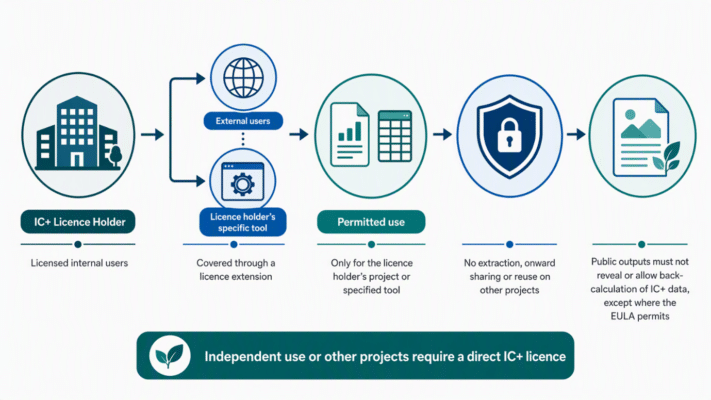
Understanding the IC+ End User Licence Agreement (EULA): Working with Premium Data
A practical guide to using, sharing and reporting licensed IC+ data As we venture into [...]
Oct

ISO 14060 Consultation Opens as SBTi Releases Corporate Net Zero Standard v2.0
Two major developments this month indicate continued evolution in the global net zero standards landscape, [...]
Jun