
Changes to the ICE Database Registration Process
About the ICE Database
The Inventory of Carbon & Energy (ICE) Database is one of the most widely used embodied carbon datasets. Since its inception, it has supported over 50,000 professionals, academics, and organisations seeking to understand and reduce the environmental impact of buildings, infrastructure, and materials.
Originally containing embodied energy and embodied carbon factors, since 2019, the ICE Database has focused solely on embodied carbon – the key metric now reported. The ICE Database contains embodied carbon data for a wide range of materials, from concrete and plastics to metals and more.
Circular Ecology have always maintained and developed the ICE Database with the goal of keeping it open, credible, and freely available. As this resource continues to grow in scope and global reach, we’re introducing a new registration framework to help manage access, maintain data quality, and ensure the resource remains sustainable for years to come.
The New Registration Process
To accompany the release of the ICE Database v4.1, we’re introducing a new registration process. This update brings clarity to how users access and apply the ICE Database data across different contexts (e.g., Educational and research, to Professional and Tools and Integration applications). The new structure ensures fairer use, clearer licensing, and continued access for all users while supporting the responsible development and upkeep of the database.
All users now register according to their intended use:
| Licence Type | Description |
| Educational | Free for teaching, learning, and academic research. No formal licence required. |
| Individual Licence | For professionals using the ICE Database independently (e.g., in embodied carbon calculations, reporting, or consultancy work). |
| Tools and Integration Licence | For organisations integrating the ICE Database data into tools, APIs, or software platforms, whether internal or external.
Requires organisational registration and designation of a Point of Contact to manage updates, compliance, and communication. |
Licence validity: Licences are valid until 30th June 2026, at which point re-registration will be required. The ICE Database data itself remains valid for Non-Educational use for up to 3 years from the date of release, after which the version reverts to Educational-only status, just as before.
What do these new licence changes mean for existing users?
- For Educational Users:
No change. Continue using the Educational version of the ICE Database for learning and research just as before. - For Professional Users:
Register for an Individual Licence before downloading or using the ICE Database v4.1. - For Tool Developers & Integrators:
Register for a Tools and Integration Licence to ensure compliance and continued access.
What’s happening with the machine-readable version?
The Machine-Readable format of the ICE Database, which was previously packaged alongside the Advanced version of the database, will now be available to purchase to support integration into software and platforms.
Purchasing the file does not grant a licence – users must still register under the appropriate licence type (Individual or Tools and Integration) before use.
Net proceeds from Machine-Readable format sales will be reinvested to help maintain and develop the ICE Database.
Funding the ICE Database
For around 15 years, the ICE Database has been developed and maintained on a largely voluntary and sponsorship basis, but the database needs significantly more resources to improve and maintain. We are therefore considering a ‘freemium’ business model, keeping a version free, but also starting to generate income to improve and maintain the database. This is explained further in an article by Dr Craig Jones.
Through this new model, Circular Ecology can maintain the ICE Database as a trusted resource while ensuring its ongoing development is properly supported. Through participating under the new framework, users help better safeguard the quality, transparency, and longevity of the ICE Database for the entire built environment community – responsibly.
Learn More & Get in Touch
ISO 14060 Consultation Opens as SBTi Releases Corporate Net Zero Standard v2.0
Two major developments this month indicate continued evolution in the global net zero standards landscape, [...]
Jun

DESNZ Release 2026 UK GHG Conversion Factors
The Department for Energy Security and Net Zero has released the 2026 UK Government Greenhouse [...]
Jun

EU Publishes Framework for Calculating Whole Life Carbon of Buildings
The European Commission has published a new framework for calculating the life cycle global warming [...]
May
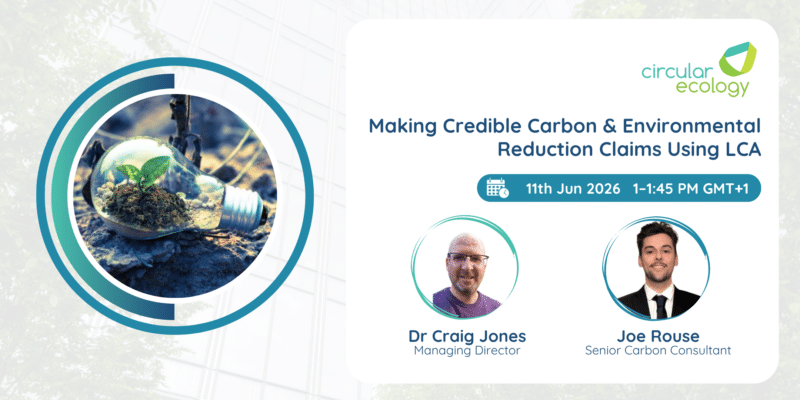
June 2026 Webinar: Making Credible Carbon & Environmental Reduction Claims Using LCA
Our next free webinar takes place on 11th June 2026, and will explore how Product [...]
May